What Paint Protection Actually Does for Your Car's Finish
Paint protection is a category of products and services designed to put a barrier between your vehicle's clear coat and everything the road throws at it. For cars in the Fort Worth area, that means UV exposure, rock chips, bug acids, and brake dust that builds up over time. The right protection layer can keep a finish looking new for years longer than bare paint ever would.
Why Bare Paint Wears Out Faster Than Most People Expect
Most factory paint jobs are thinner than people realize. The clear coat on top is doing most of the protective work, and it takes a beating every single day. Sun, heat, road debris, and even automatic car washes all chip away at it gradually.
By the time you notice swirl marks or fading, the damage has already been accumulating for months. That's the frustrating part about paint degradation. It's slow enough that you don't see it happening, but fast enough that a two-year-old car can look noticeably older than it should.
Paint protection is the answer to that problem, but there are several different types, and they don't all work the same way.
What Are the Main Types of Paint Protection?
Paint Protection Film
Paint protection film, often called PPF, is a clear urethane film that gets applied directly to the painted surface. It's thick enough to absorb rock chips and minor abrasions without transferring the damage to the paint underneath. High-performance vehicles and daily drivers alike benefit from it, especially on high-impact areas like the hood, front bumper, and side mirrors.
Some films have self-healing properties, meaning light surface scratches will disappear with heat exposure. That's not marketing language. The urethane material actually relaxes back into its original shape when it warms up, which makes it genuinely useful on a car that sees regular highway miles.
Vinyl Wraps with Protective Properties
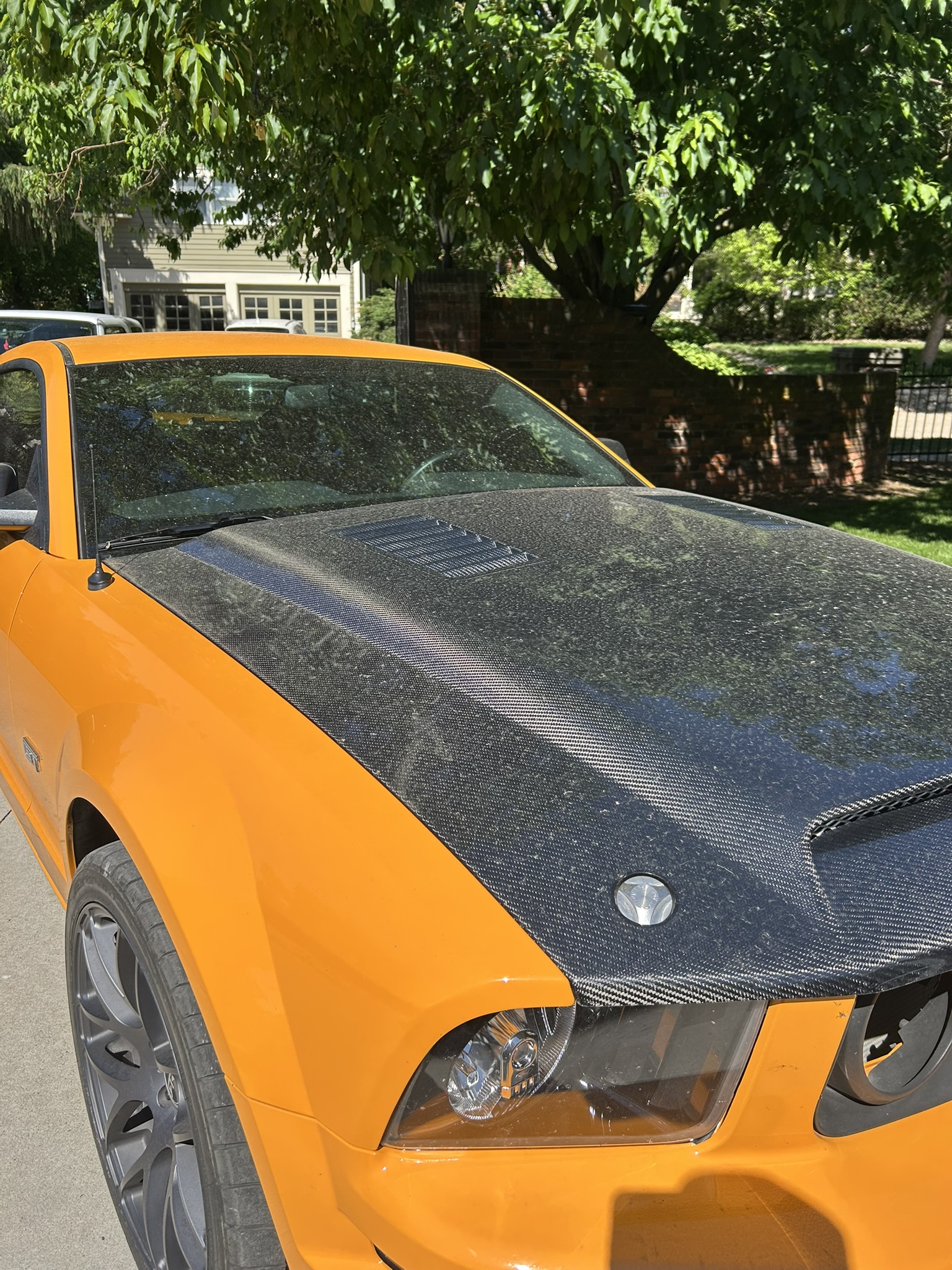
A vinyl wrap like the carbon-fiber style you see on a Mustang hood serves two purposes at once. It changes the look of the vehicle while also putting a physical layer between the paint and the environment. The paint underneath stays protected from UV rays, minor abrasions, and surface contamination as long as the wrap is in place.
When the wrap eventually comes off, the paint underneath is often in better condition than the exposed panels around it. That's a real benefit for anyone who wants to preserve resale value while also customizing the appearance of the car.
Ceramic Coating
Ceramic coating is a liquid polymer that bonds chemically to the paint surface. It doesn't add physical thickness the way PPF does, but it creates a hard, hydrophobic layer that repels water, dirt, and contaminants. Cleaning becomes significantly easier because grime doesn't bond to the surface the same way it does on bare paint.
Ceramic coating works well as a standalone product on vehicles that aren't exposed to heavy rock chip risk. It also works as a top layer over PPF, giving you both physical impact protection and chemical resistance at the same time.
Does Paint Protection Actually Hold Up in Texas Heat?
This is a fair question for anyone living in North Texas. The summers here are brutal, and UV exposure is one of the primary causes of clear coat failure and paint oxidation. Quality paint protection products are specifically engineered to handle high UV environments, and in many cases they perform better in hot climates than in milder ones because the heat helps the materials cure and bond properly.
The bigger risk in this region is actually the combination of heat and road debris. Texas highways generate a lot of chip damage, especially on the front end of any vehicle. That's where a physical barrier like PPF earns its cost back quickly.
Proper prep work matters just as much as the product itself. If the paint has existing swirl marks, oxidation, or contamination, those need to be addressed before any protection layer goes on. Applying a coating or film over compromised paint just locks the damage in place. A paint correction step first gives the protection something clean to bond to.
How Long Does Paint Protection Last?
Longevity depends on the product type and how the vehicle is maintained afterward. A quality ceramic coating applied correctly can last several years with proper care. PPF films from reputable manufacturers are typically rated for similar lifespans, though actual results vary based on driving conditions and exposure.
Maintenance matters more than most people account for. Even the best coating degrades faster if the car is never washed or if harsh chemicals are used on it regularly. The protection layer is durable, but it's not indestructible. Treating it well extends its life considerably.
If you want to learn more about how these services connect to the broader detailing process, the CMC Details resource hub covers a range of topics that are worth reading through before you make any decisions about your vehicle.
Is Paint Protection Worth It for an Older Vehicle?
The honest answer is that it depends on the condition of the paint and what you're trying to accomplish. On a newer vehicle or a car you plan to keep for a long time, protection makes a lot of sense. You're preserving something that still has full value.
On an older vehicle with already-faded or damaged paint, the first question is whether paint correction is worth doing first. If the paint can be brought back to a good condition, then protecting it afterward makes the correction work last longer. If the paint is too far gone to restore, adding a protection layer on top doesn't accomplish much.
A detailer who looks at the car in person can give you a straight answer about what's realistic. CMC Details works as a Fort Worth mobile auto detailing service, which means they come to you and can assess the vehicle directly without you having to drive anywhere. If you're trying to figure out what your car actually needs, that kind of hands-on evaluation is more useful than any general guide.
Give them a call at (319) 777-6733 if you want to talk through what makes sense for your specific vehicle.
What does paint protection film actually protect against?
Paint protection film guards against rock chips, road debris, minor abrasions, and UV damage. It creates a physical barrier over the clear coat so that impact damage absorbs into the film rather than the paint underneath.
How long does ceramic coating last on a car in Texas?
A professionally applied ceramic coating can last several years depending on the product used and how well the vehicle is maintained afterward. Texas heat and UV exposure are hard on bare paint, but quality coatings are designed to handle those conditions.
Do I need paint correction before getting a ceramic coating?
If the paint has swirl marks, scratches, or oxidation, those should be corrected before any coating goes on. Coating over damaged paint seals the defects in place rather than hiding them.
Is paint protection worth it near me in the Fort Worth area?
For vehicles that see regular highway driving in North Texas, paint protection is a practical investment. The combination of UV exposure and road debris in this region accelerates paint wear faster than in many other climates.
Can a vinyl wrap protect my car's paint the same way PPF does?
A vinyl wrap does protect the paint underneath from UV rays and surface abrasion, and when removed, the covered paint is often in better shape than exposed areas. However, vinyl wraps are generally not as impact-resistant as dedicated paint protection film designed specifically for chip resistance.
Find us on Google Call (319) 777-6733 anytime.
CMC Details - mobile auto detailing serving Fort Worth, TX. (319) 777-6733.


Comments
Post a Comment